A Living Shoreline is Protecting a Coastal Town in Nova Scotia
They say that this bay is home to an island for every day of the year – 365, give or take. Welcome to Mahone Bay, Nova Scotia; the town named after the bay has a population of over 1,000 and is tucked into a small inlet off the North Atlantic Ocean.
The town’s skyline is topped by three church spires amidst quintessential coastal homes, and several cafes and restaurants. The main drag itself, Edgewater Street, snakes along the ocean’s edge, which is glassy like a mirror on a calm day, and angry and turbulent on stormy days. This proximity to the ocean means that the town of Mahone Bay is extremely vulnerable to the effects of climate change. This includes sea level rise, storm surge, increased precipitation, flooding, coastal erosion, and an increase in contaminated stormwater runoff entering the harbour, all of which have significant negative impacts on the infrastructure and people who live here. This is where a nature-based solution would really come in handy, something like the Mahone Bay Living Shoreline.
If you’ve driven through Mahone Bay, NS, recently, you may have realized that construction is fast underway! The Mahone Bay Living Shoreline as we know it is expanding rapidly!
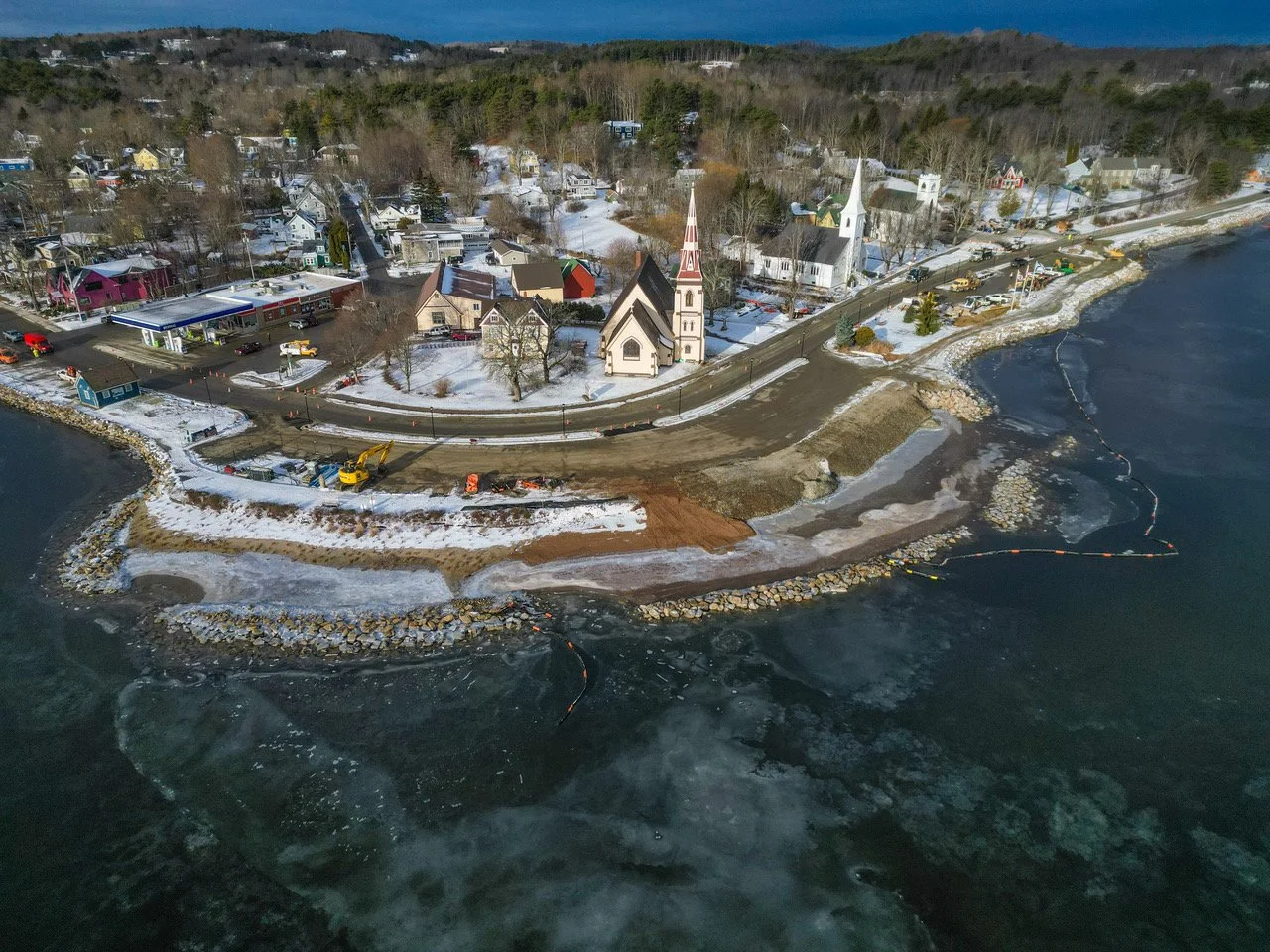
Image: The Mahone Bay Living Shoreline site undergoing expansion construction (December 10, 2025).
What is a Living Shoreline?
As the name suggests, a Living Shoreline is a protected and stabilized shoreline that is made of natural materials such as plants, sand, or rock.
The one in Mahone Bay is constructed of three components:
A rock sill, which is a hard engineered structure that runs parallel to the shoreline;
A tidal wetland, which fills the area between the rock sill and the shoreline with planted native species; and
A vegetated bank, which is a graded area, planted with native shrubs and herbaceous perennials.
These three components work together, and each play a role in protecting the town from flooding and mitigate coastal erosion. The rock sill helps reduce wave energy and storm surge impact. It also acts as an anchor for the sediment in the tidal wetland, which naturally filters stormwater runoff and reduces storm surge and wave energy. The wetland creates valuable coastal habitat for fish and bird species. Amongst all of this, the vegetated bank helps to stabilize the soil.
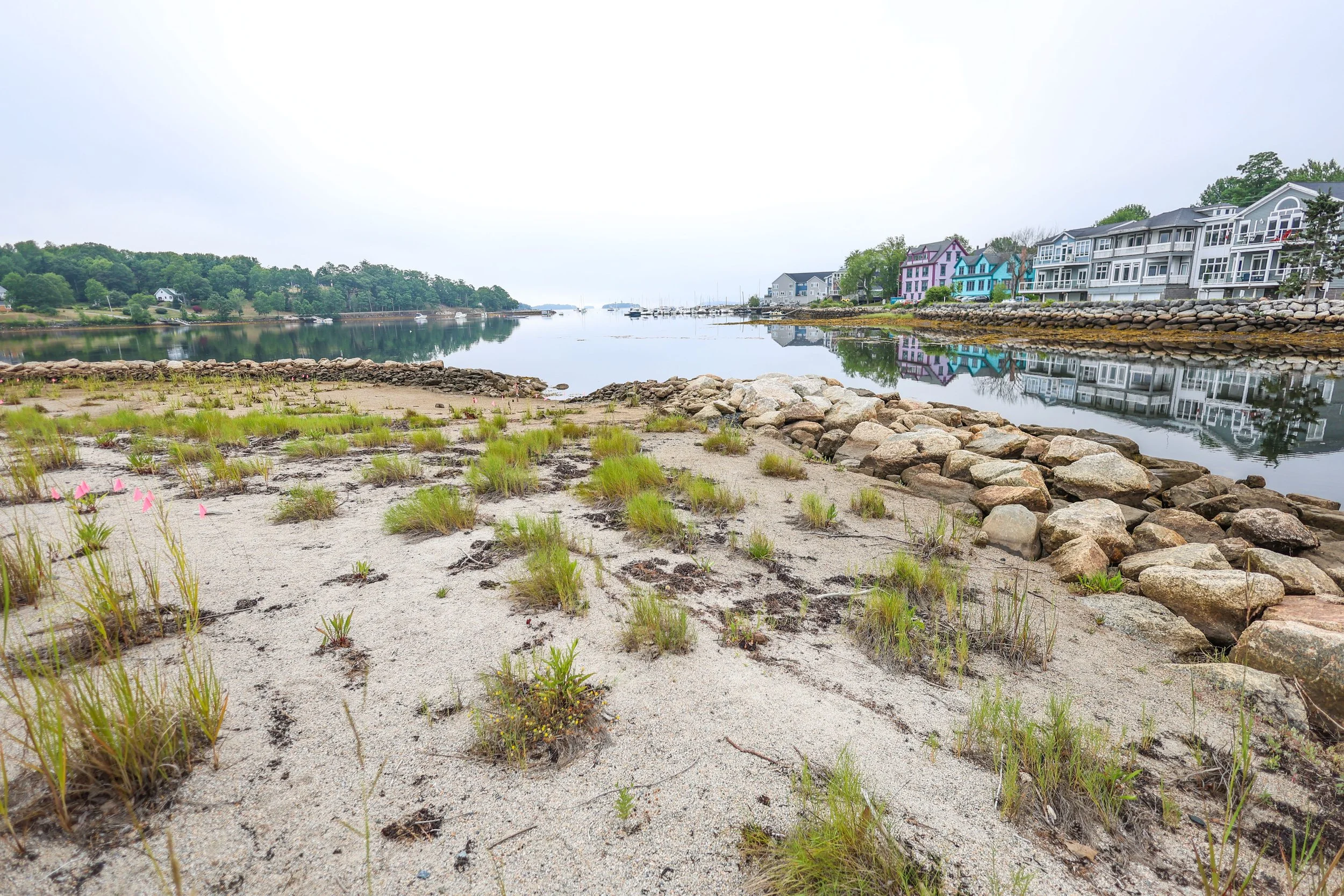
Image: The plants growing along the living shoreline’s tidal wetland (July 2025).
History of the Mahone Bay Living Shoreline
The physical shoreline became a reality in the summer of 2022 with the installation of a pilot site. The public were invited to participate in the planting of native plants and learn about the purpose of the project. After several weather events the following winter, Christmas tree boughs were repurposed to reinforce the plants at the shoreline. Winter 2023 was also the year Coastal Action received funding to move forward with the Mahone Bay Living Shoreline expansion.
In summer 2025, a fish and fish habitat monitoring component was added to the project to understand the biodiversity living underwater by the site. Collaboration with partners has been an essential component to making the shoreline a success, including the Town of Mahone Bay, CBCL Limited, TransCoastal Adaptations at Saint Mary’s University and CB Wetlands & Environmental Specialists.
Over the past two months, the Living Shoreline expansion has begun. The construction crew removed the rock sill along the existing embankment to expand the shoreline from 60m to 140m. The expansion is continuing northward and involves laying down sediment as the shoreline's base layer and then adding a layer of sand on top.
This upcoming spring, Coastal Action will be hosting a public planting event for the vegetated bank. This event will be open to all members of the public, regardless of experience and knowledge, so stay tuned for further details.

Image: A Coastal Action staff member and the Harbour Construction crew on-site (Fall 2025).
Native Plants
The Mahone Bay Living Shoreline uses a variety of native plant species whose roots work together to stabilize the embankment.
Along the vegetated bank area, you will find shrubs such as serviceberry, sweet pepperbush, northern bayberry and ground juniper, intermingled with wild roses. In the spring, the bank is attractive to pollinators and throughout the summer offers nutritious berries and welcoming branches. Over ten species can be found in the tidal wetland area including: smooth cordgrass, salt meadow hay, salt meadow rush, sweetgrass and prairie cordgrass. Alongside seaside goldenrod, these plants offer an excellent nectar source and habitat for wildlife.
Mahone Bay is home to a variety of habitats such as forests, rocky shores, beaches, wetlands, and mudflats, and this Living Shoreline reflects the mosaic of native plants that have weathered through centuries of harsh coastal conditions.
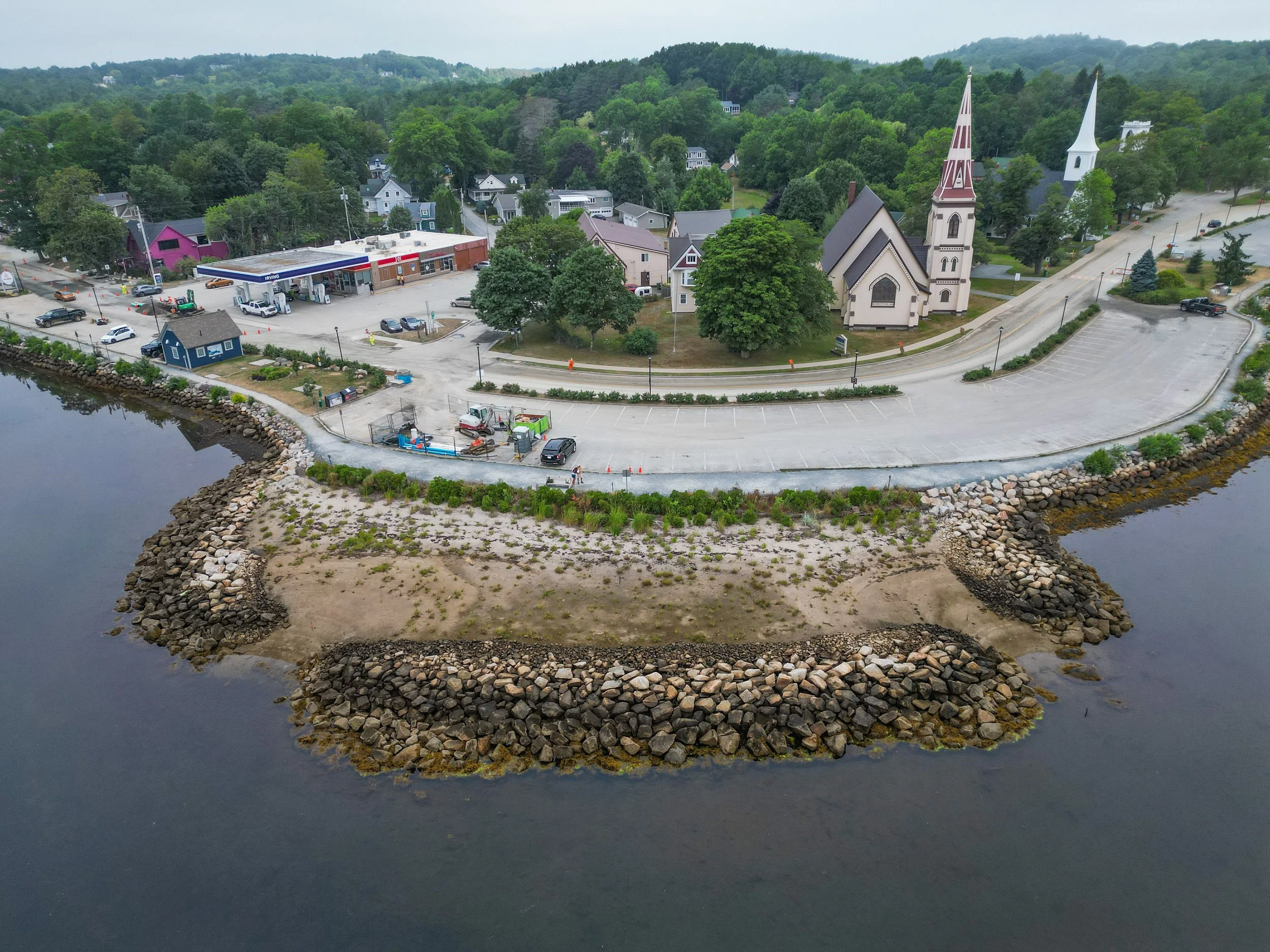
Image: The Mahone Bay Living Shoreline pilot site, pre-construction (July 2025).
Future of the Mahone Bay Living Shoreline
The good news is that the Living Shoreline expansion will increase protection from sea level rise, storm surge, coastal erosion, and flooding along Edgewater Street.
Beyond having a direct impact on the Mahone Bay community, the shoreline has set a precedent for other regional towns in similar contexts, as it demonstrates how a waterfront town can use natural infrastructure to adapt to climate change risks and protect their own community. We cannot wait to continue sharing updates, as the construction progresses.
Lastly, thank you to all our funders for your support on this project.